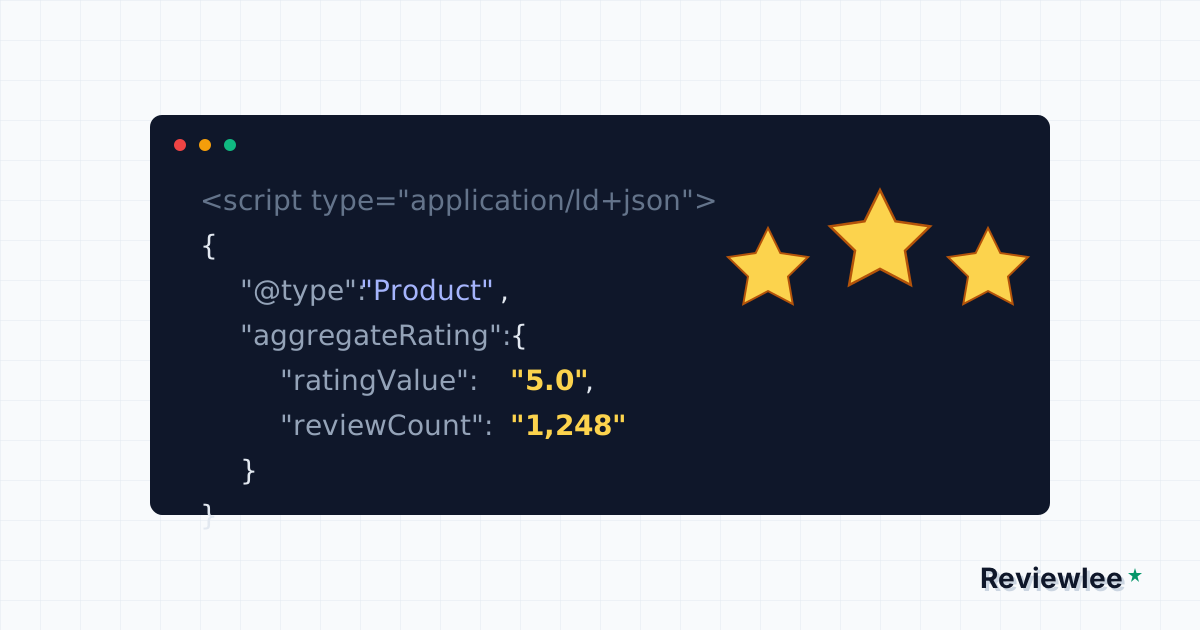
What is Review Schema Markup?
You've seen them in search results: the golden stars that appear under a product link. They instantly draw the eye, build trust before a click, and drastically improve Click-Through Rates (CTR).
This isn't magic—it's Structured Data, specifically Review Schema.
Schema markup is a standardized format (vocabulary) that helps search engines understand the content of your page. When you properly implement review schema, you're explicitly telling Google, "This product has a 4.8-star rating from 125 customers."
Why It Matters for 2026
In the age of AI overviews and zero-click searches, structured data is more critical than ever.
- Rich Snippets: The "Star" rating in SERPs is the most visible benefit.
- Higher CTR: Studies show rich snippets can increase click-through rates by up to 30%.
- Entity Understanding: It helps AI models understand your brand reputation and product details.
JSON-LD: The Gold Standard
While there are multiple ways to implement schema (Microdata, RDFa), JSON-LD (JavaScript Object Notation for Linked Data) is the method recommended by Google. It's cleaner, easier to maintain, and doesn't clutter your HTML tags.
Here is a basic example of what it looks like for a product:
<script type="application/ld+json">
{
  "@context": "https://schema.org/",
  "@type": "Product",
  "name": "Super Ergonomic Chair",
  "image": "https://example.com/photos/1x1/chair.jpg",
  "aggregateRating": {
    "@type": "AggregateRating",
    "ratingValue": "4.8",
    "reviewCount": "89"
  }
}
</script>
Types of Review Schema
Not all reviews are the same. Choosing the right @type is crucial.
1. Product Schema
For e-commerce stores. This attaches reviews to a specific item you sell.
- Best for: Shopify stores, physical goods.
- Key Property:
aggregateRatinginside aProducttype.
2. SoftwareApplication Schema
For SaaS and apps (like Reviewlee!).
- Best for: Web apps, mobile apps, downloadable software.
- Key Property:
applicationCategoryandaggregateRating.
3. LocalBusiness Schema
For restaurants, clinics, and service providers.
- Best for: Brick-and-mortar locations.
- Note: Google strictly regulates self-hosted reviews for Local Businesses. You often cannot display "self-serving" reviews (reviews gathered by the business about itself) as rich snippets for a LocalBusiness homepage. However, third-party sites can.
Common Schema Mistakes to Avoid
- Aggregate Rating without Reviews: You can't just slap a "5 stars" rating in schema if the page doesn't prominently show the reviews.
- Hidden Content: The reviews in your schema must be visible to human users on the page.
- Self-Serving Reviews for LocalBusiness: As mentioned, Google often ignores these for rich snippets on your own site.
How Reviewlee Automates SEO
Managing JSON-LD manually is a pain. You have to update the reviewCount and ratingValue every time a new review comes in.
Reviewlee handles this automatically.
When you use our Embed Widgets or SDK, we inject the correct, up-to-date JSON-LD schema into your page.
- Dynamic Updates: As soon as a verified review comes in, the schema updates.
- Correct Type: We let you configure whether you are a Product, Service, or Course.
- Validation: We test our output against Google's Rich Results Test to ensure eligibility.
Stop wrestling with JSON scripts. Let your review infrastructure handle the technical SEO for you.